
In summary
For custom ultimate jerseys, sublimation is usually the better choice when you want full-colour artwork, gradients, detailed patterns and a design that covers the whole garment. Screen printing can still make sense for simpler designs and other types of apparel.
- Sublimation dyes the design into the polyester fibre, rather than placing a separate ink layer on top.
- It allows full-colour designs, gradients and all-over artwork without building the design around a small number of colours.
- Sublimation requires polyester or a polyester-heavy blend.
- Screen printing works on a wider range of fabrics, but each printed colour is applied as a separate ink layer.
On this page
How sublimation and screen printing work
Sublimation vs screen printing
Which printing method lasts longer?
Which method is better for jersey design?
When you’re ordering custom teamwear, the printing method affects much more than how the logo looks. It affects the type of design you can create, which fabrics you can use, how the artwork behaves as the garment is worn and washed, and how the order is priced.
For ultimate frisbee jerseys, the choice is particularly relevant because teams often want lightweight technical fabrics combined with full-colour, all-over designs.
So what’s the difference between sublimation and screen printing, and which one makes more sense for a custom ultimate jersey?
How sublimation and screen printing work
The simplest way to understand the difference is to look at where the colour ends up.
Sublimation
With sublimation, the design is first printed onto transfer paper using specialised dye. Heat then turns the dye into a gas, allowing it to bond directly with the polyester fibres of the garment.
The result is that the design becomes part of the fabric rather than sitting on top of it as a separate printed layer.
That’s what makes sublimation so useful for detailed sportswear designs. Our guide to sublimated jerseys explains the process step by step. The artwork can cover the garment from edge to edge, including areas around seams and across large sections of the fabric.
Screen printing
Screen printing applies ink to the surface of the garment through a mesh screen. Each colour is generally applied as a separate layer, so a design with several colours requires more printing steps than a simple one-colour design.
Screen printing can produce strong, durable graphics and works on a much wider range of fabrics, including cotton, polyester and blends.
It is particularly well suited to simpler graphics such as a logo, text or a small number of solid-colour elements.
Sublimation vs screen printing
| Aspect | Sublimation | Screen printing |
|---|---|---|
| How the design is applied | Dye bonds into the polyester fibre | Ink is applied to the surface |
| Best suited to | Full-colour sportswear and all-over designs | Simple graphics and solid-colour prints |
| Gradients | Yes | Possible, but requires additional techniques |
| Photographic/detail-heavy artwork | Well suited | Less practical for many sportswear applications |
| Fabric | Polyester or polyester-heavy blends | Many fabric types |
| Separate print layer | No | Yes |
| All-over artwork | Yes | Generally not the typical approach |
Neither method is universally better. The right choice depends on the garment, design, fabric and type of order.
For a custom ultimate jersey where the artwork is intended to become part of the entire garment, sublimation has a clear advantage.
Which printing method lasts longer?
This is one of the biggest differences between the two methods.
With screen printing, the ink sits on top of the fabric. Repeated washing, stretching and general wear can eventually affect that printed layer. Depending on the ink, garment and care routine, printed areas can crack, peel, flake or fade over time.
With sublimation, there isn’t a separate printed layer sitting on top of the garment. The dye becomes part of the polyester fibre.
That means there is no surface print to crack or peel away from the fabric in the same way.
Of course, no garment is indestructible. How long a jersey looks its best depends on factors including the fabric, production quality, frequency of use, washing and exposure to the elements.
But when the goal is a repeatedly worn sports jersey with an all-over design, integrating the artwork into the fabric is a significant advantage.
Which method is better for jersey design?
If your idea is a simple logo on a plain shirt, screen printing may be perfectly suitable.
But custom ultimate jerseys are often designed very differently.
You might want:
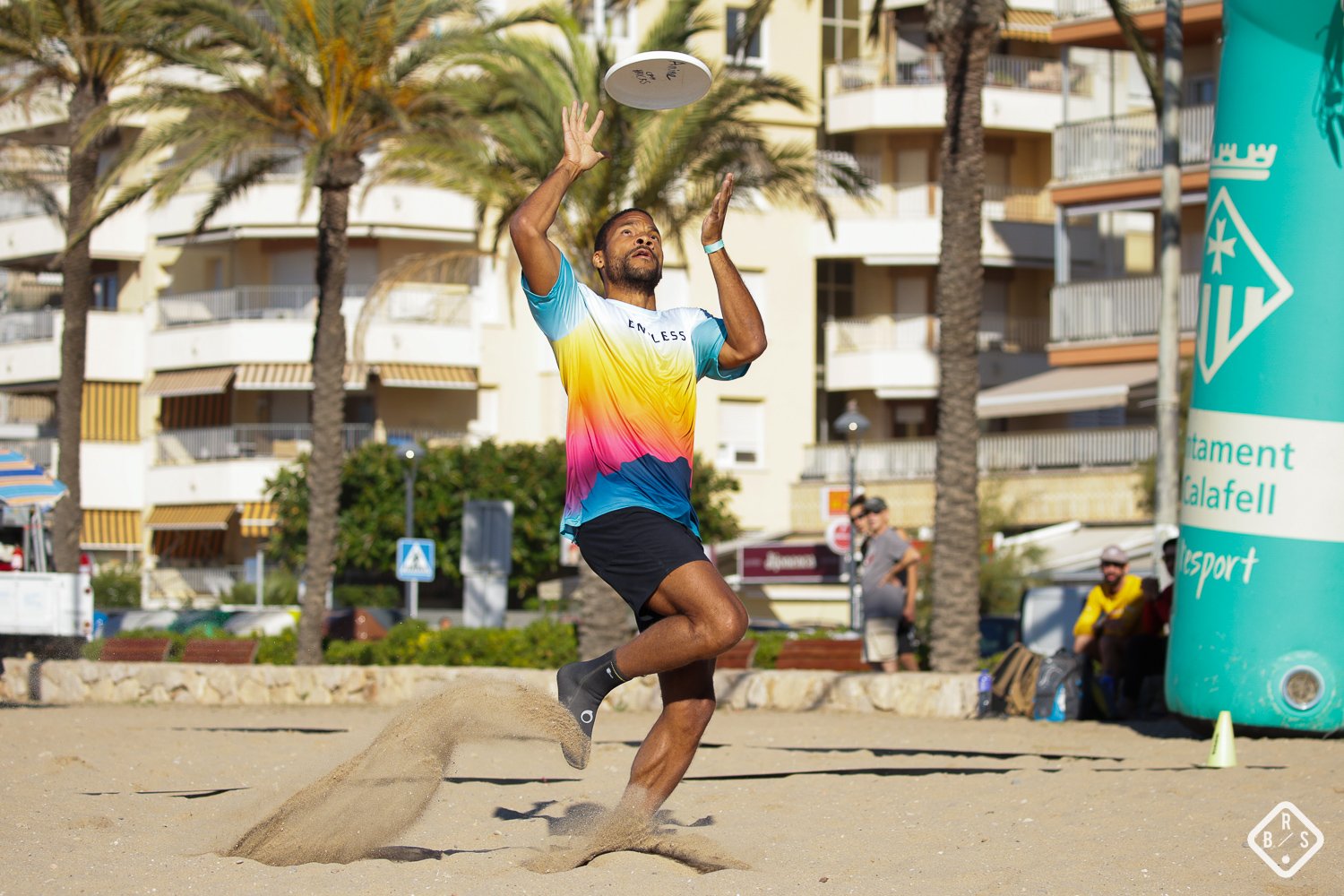
- A full-colour gradient.
- An all-over geometric pattern.
- A detailed illustration.
- A photographic or highly detailed graphic.
- A design that continues across seams and around the garment.
- Different artwork on the front, back and sleeves.
This is where sublimation really opens things up.
Instead of thinking about where you can place a logo on a blank shirt, you can think about the entire garment as the canvas.
That’s one reason sublimation has become such a natural fit for custom ultimate jerseys and other technical teamwear.
Have a design in mind?
Send us your idea and we’ll tell you what sublimation can do with it.
Does sublimation cost more?
This is where the answer depends on the production method and the supplier.
One major difference is how colour affects the production process. Screen printing normally involves separate screens and ink applications for different colours, so a more complex multi-colour design can require additional production steps.
Sublimation doesn’t work that way. The design is transferred as a full-colour image, so you don’t build the price around the number of colours in the same way as traditional screen printing.
That makes detailed artwork, gradients and complex colour combinations much more practical for sublimated teamwear.
It doesn’t mean every sublimated product from every supplier will cost the same regardless of design. Garment type, quantity, construction and supplier pricing can all affect the final price.
For Manta Squadron jerseys, the freedom to use full-colour artwork is part of the standard sublimated production process rather than something you need to build around a limited colour count.
Why sublimation works so well for ultimate jerseys
Ultimate jerseys have a particular combination of requirements.
- They need to be lightweight and comfortable during high-intensity play.
- They are worn repeatedly throughout a season.
- Teams often want distinctive, full-colour designs.
- Numbers need to remain visible against the artwork.
- Teams commonly need both light and dark versions.
Sublimation fits that combination particularly well because it allows the artwork to become part of the technical polyester garment rather than adding a separate layer on top.
Manta Squadron jerseys use a 145gsm recycled polyester knit with bonded, flatlock seams, providing a lightweight technical base for sublimated artwork.
That means the production method and the garment are designed around the same principle: keep the kit lightweight, wearable and visually unrestricted.
What does this mean for your order?
If you’re ordering custom ultimate jerseys from Manta Squadron, there are a few practical things to keep in mind.
1. Start with the design you actually want
Don’t simplify a design just because you’re worried about the number of colours. Sublimation can handle detailed full-colour artwork.
2. Use precise colour values
If your club already has established colors, send exact colour values such as hex codes where possible. Saying “dark blue” leaves much more room for interpretation than providing a precise reference.
Our ultimate jersey color guide explains how to build a palette that works across your light and dark sets.
3. Remember that sublimation requires polyester
Sublimation works by bonding dye into polyester fibres, so the garment needs to contain polyester or a suitable polyester-heavy blend.
Manta Squadron’s jerseys already use a recycled technical polyester suitable for sublimated production, so you don’t need to choose a separate printing-compatible fabric.
4. Think about numbers separately
Having unlimited design freedom doesn’t mean every part of the jersey should be equally busy.
Numbers still need strong contrast and clear placement. A detailed background should never make it difficult to identify a player.
See our guide to what makes an ultimate jersey look great for more on color, contrast, numbers and overall design.
Frequently asked questions
Is sublimation better than screen printing for jerseys?
For custom sports jerseys with full-colour or all-over artwork, sublimation is usually the better fit. It allows detailed designs to become part of the polyester fabric rather than sitting on top as a separate ink layer. Screen printing can still be a good choice for simple graphics on a wider range of garments.
Does sublimation last longer than screen printing?
Sublimation has an advantage because the dye is integrated into the polyester fibre rather than sitting on the surface as a separate print layer. There is therefore no printed layer to crack or peel in the same way as surface-applied graphics. Actual garment lifespan still depends on the fabric, production quality, use and care.
Does sublimation fade?
Sublimation integrates the dye into the polyester fibre rather than applying a separate layer on top. This means the design doesn’t wear away as a surface print. How long the colours remain at their best still depends on how the garment is used and cared for.
Can sublimation use gradients and multiple colours?
Yes. Full-colour artwork, gradients, patterns and detailed illustrations are all well suited to sublimation. You don’t need to build the design around a small number of printed colours.
Can any fabric be sublimated?
No. Sublimation requires polyester or a suitable polyester-heavy blend because the dye needs to bond with the polyester fibres. This is why sublimated sportswear is typically made from technical polyester.
Is screen printing cheaper than sublimation?
It depends on the garment, quantity, design and supplier. Screen printing can be very effective for simple, limited-colour graphics, while sublimation becomes particularly attractive when you want detailed full-colour artwork without building the production process around individual colours.
Why is sublimation popular for ultimate frisbee jerseys?
Ultimate teams often want lightweight technical jerseys with distinctive full-colour designs. Sublimation combines polyester sportswear with the freedom to use detailed, all-over artwork, making it a natural fit for custom ultimate teamwear.
What fabric does Manta Squadron use for sublimated jerseys?
Manta Squadron jerseys use a 145gsm recycled polyester knit with bonded, flatlock seams. Polyester is the required base for sublimated artwork.
Can Manta Squadron create a fully sublimated ultimate jersey?
Yes. Manta Squadron jerseys are produced using sublimation, allowing full-colour and all-over artwork. Send us your logo, colors or rough design idea and we’ll tell you what’s possible.